Part redesign for Additive Manufacturing (DfAM) | Additive Manufacturing Laboratory
I was tasked with redesigning a part to be manufactured using an AM process. The function and full connecting assembly were confidential and not disclosed, which posed a challenge in making design decisions. All changes had to be approved before being implemented to ensure the part’s function was not affected.
Redesign process: My initial approach was to make the part self-supporting by removing any overhangs and thin-to-thick wall transitions because it saves materials, cost, and time by eliminating the need to remove them afterwards. After looking at the displacement results from Netfabb simulations, I added supports in high thermal residual stress locations to improve heat transfer from the part to the baseplate and prevent warping.
Post-Print Characterization: The part was printed using an EOS M290 with AlSi10Mg. I used Peregrine (software from Oak Ridge National Labs) and the built-in EOS print monitoring to determine the cause of streaking on the part to be from spatter from neighboring parts. I found a crack as well as significant porosity (due to heavily reused metal powder) when viewing the part under a scanning electron microscope (SEM) and determined that the part was not usable.
Impact & Reflection: The goal of the project was to gain exposure to the DfAM process as well as defect characterization. The hardest part of the project was figuring out where to look for defects within the part. The small crack found, for example, can pose issues with fatigue in a cyclically loaded part, but it was difficult to identify. As a result, learning to utilize post-processing tools to determine and alleviate defects was the most important takeaway for me. I aim to utilize this again in the future for parts with low build volumes or complex internal geometries.
Key Skills & Concepts Used: DfAM, LPBF, Autodesk Netfabb, Solidworks, SEM, ImageJ, Porosity, Defect Characterization
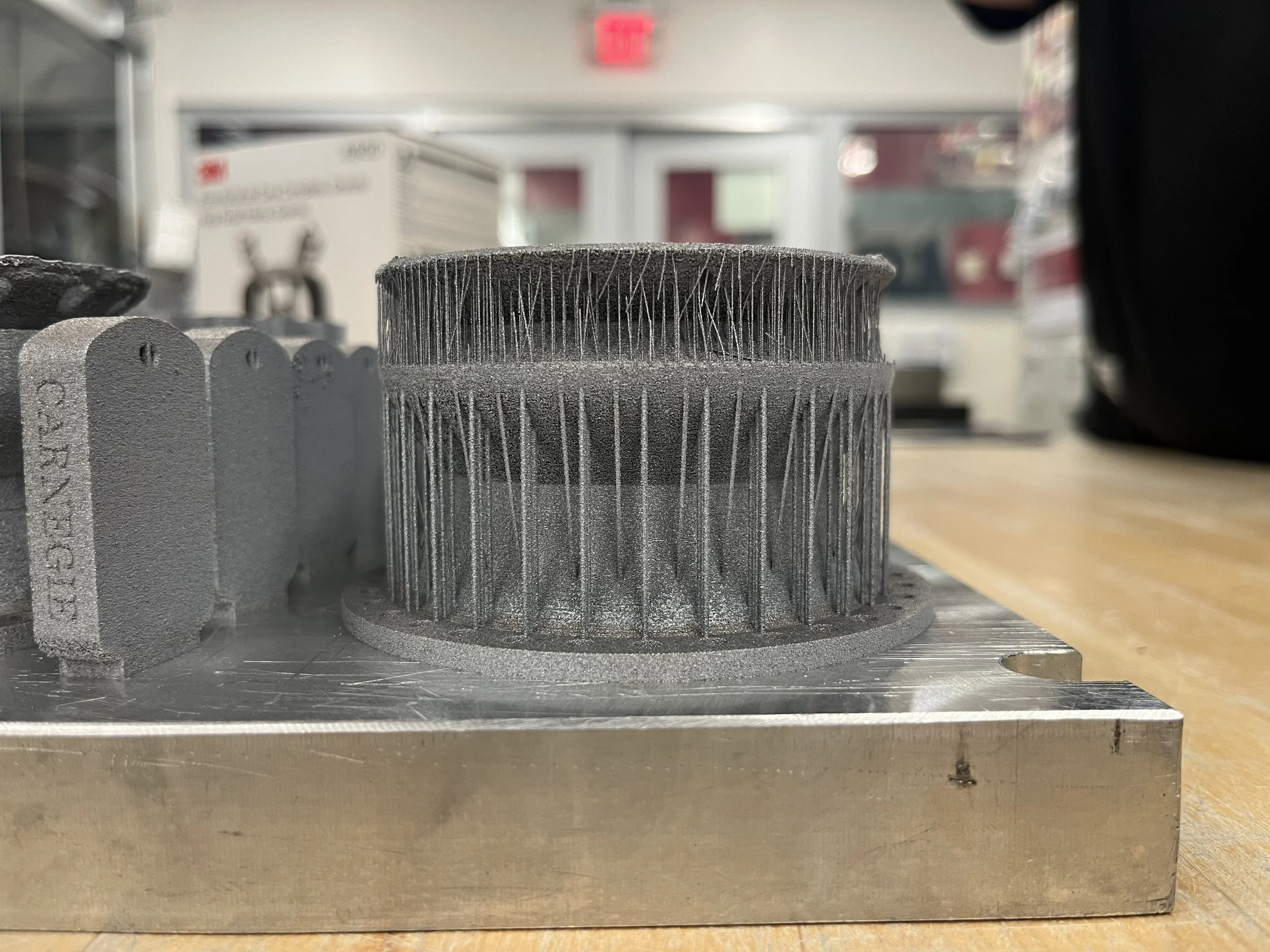
Finished part before seperation from baseplate
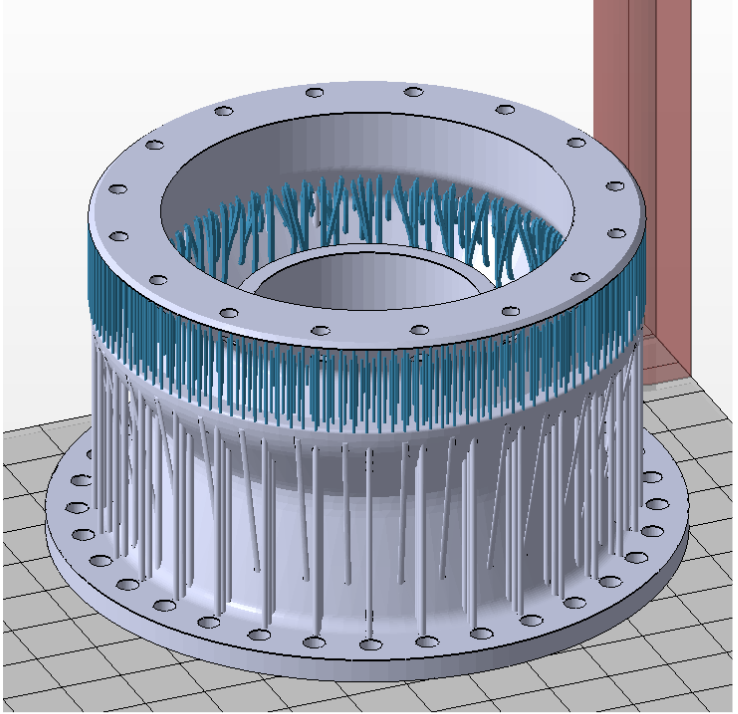
Final CAD of part in Netfabb
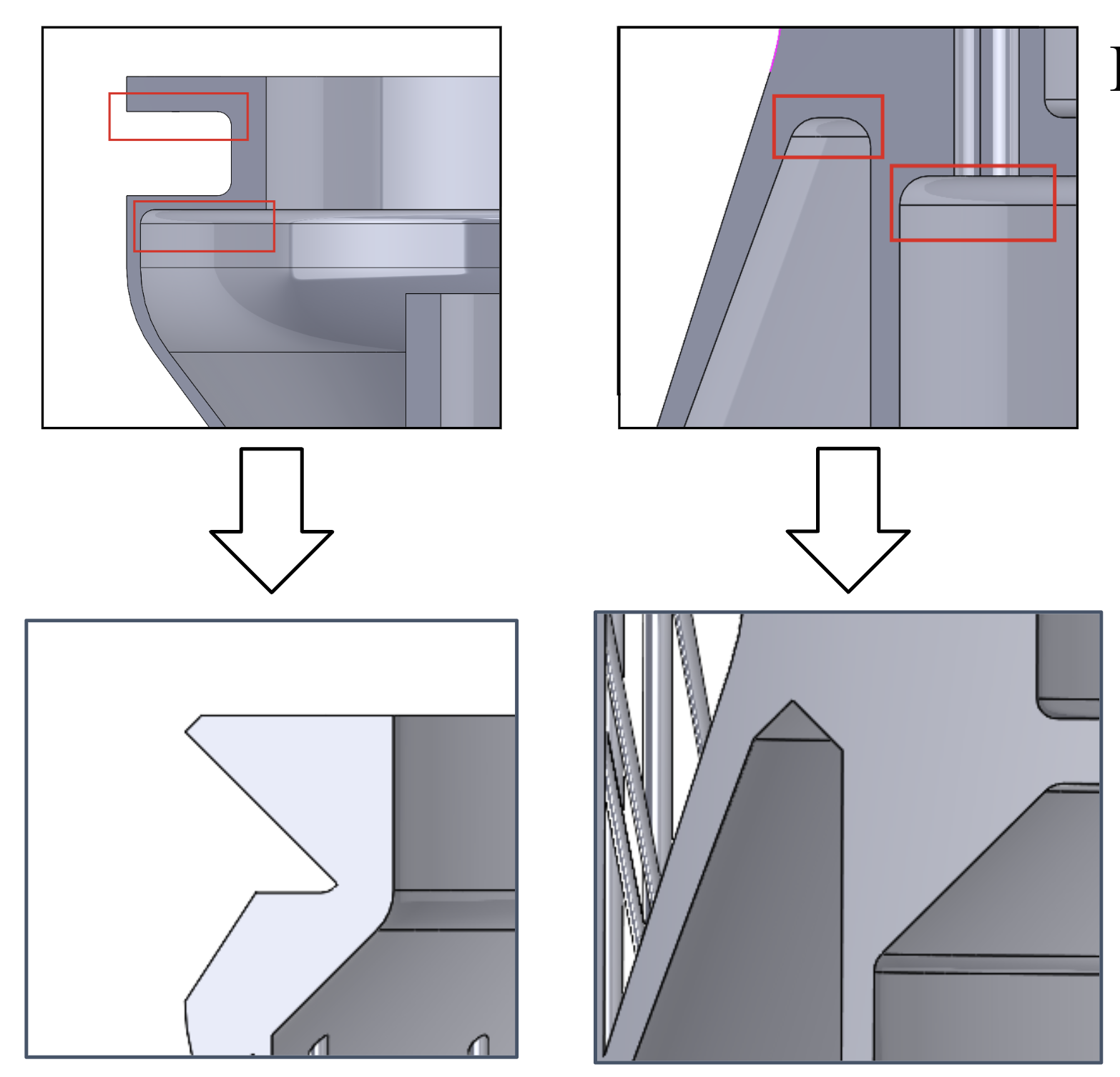
Changes to part to make overhangs self-supporting by maintaing a 40-45 degree angle
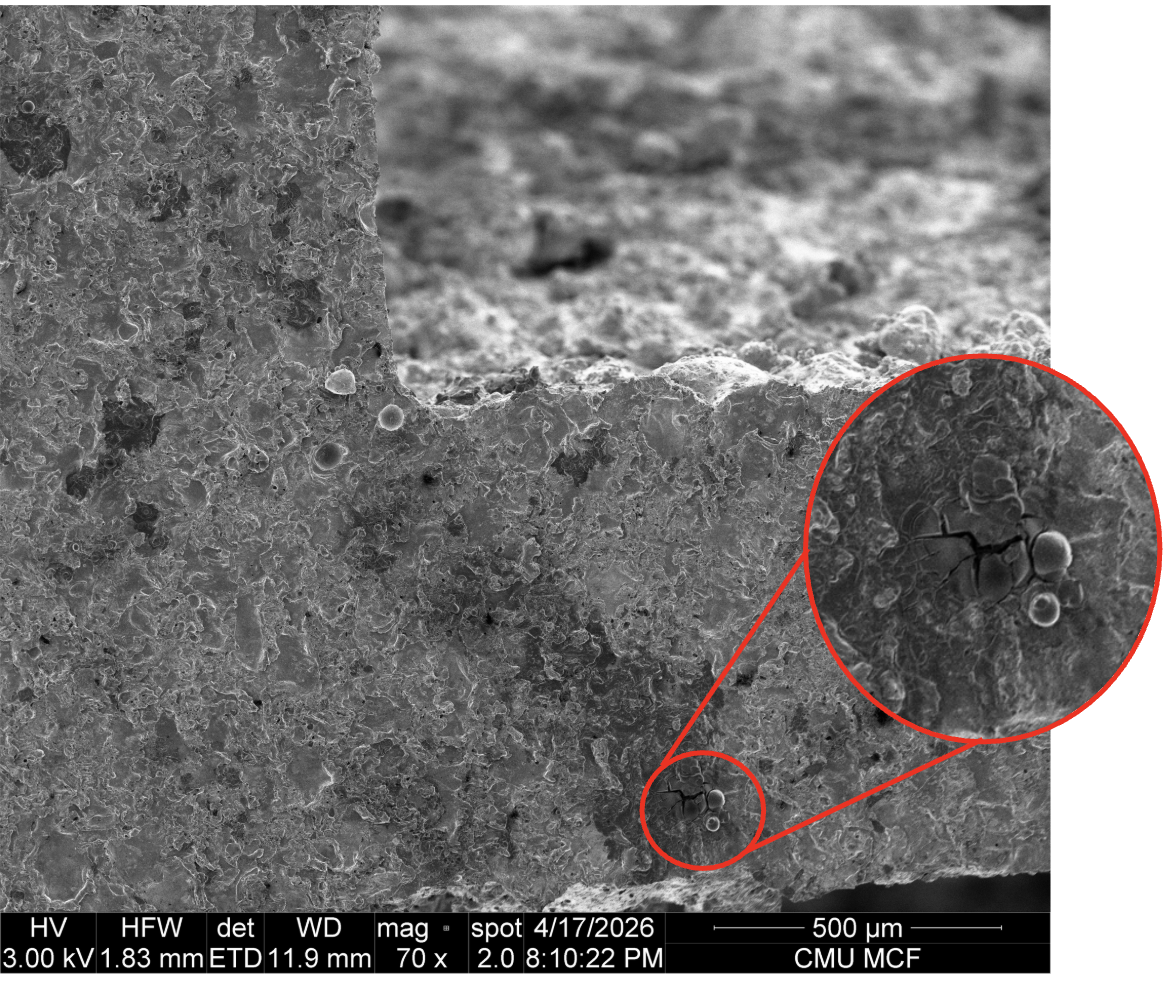
SEM image of crack found in part
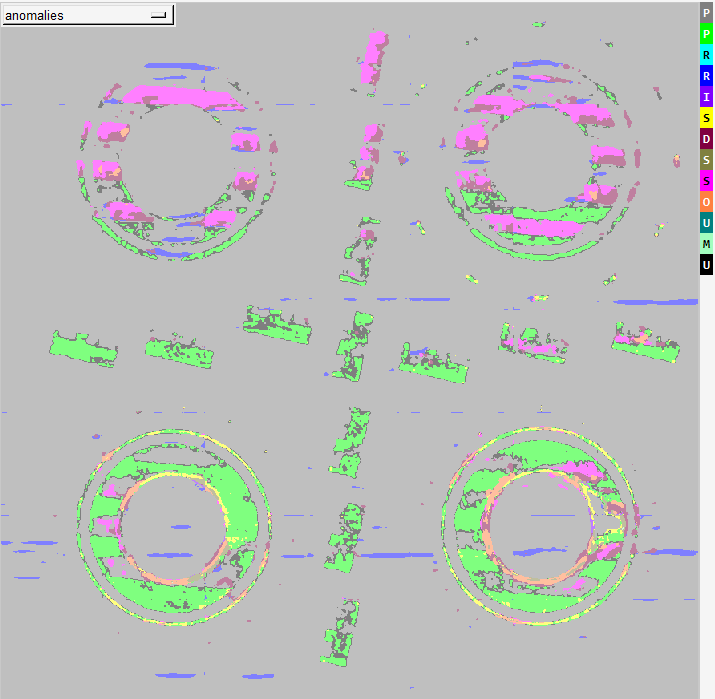
Peregrine Results (My part is the bottom right)
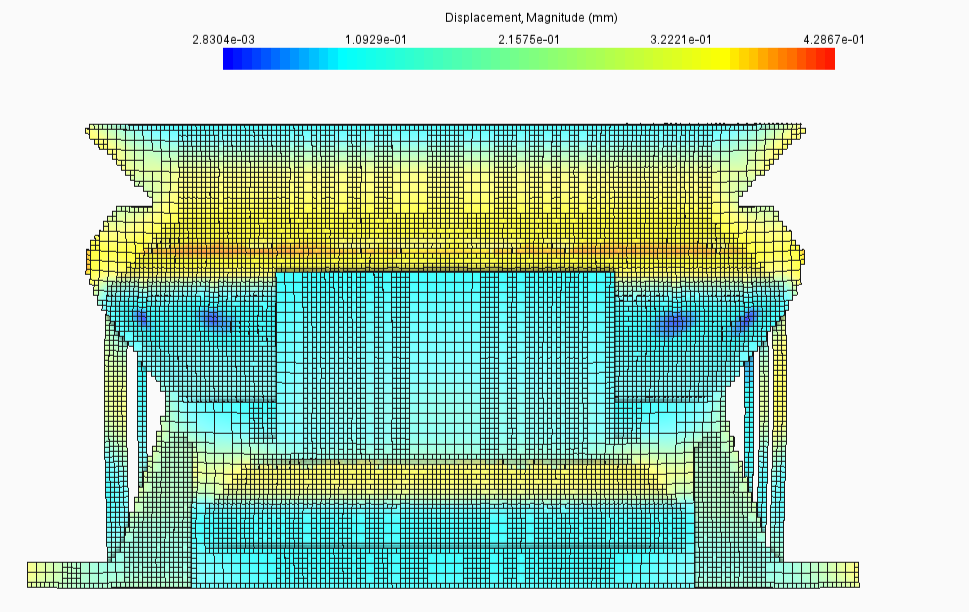
Netfabb simulation showing significant displacement under the top inner ring of the part. Supports were added to fix this.