Plug Assist: Assistive Technology | Mechanical Design Methods
For this project, I was tasked with creating a modification to an existing product to make it accessible for people with disabilities. My group chose to design a product that helped individuals with wrist debilitating conditions with plugging and unplugging appliances into wall sockets.
Design process: The first design used electromagnetics with reversible currents, but failed due to the inability to create a strong enough repulsion. I proposed a design with a mechanical advantage in the form of a lever to achieve the function, which eliminated the need for batteries. I designed the telescoping rod and sliding mechanism to translate the lever motion into the linear motion needed to plug an appliance into a wall.
Impact & Reflection: This was my first exposure to creating assistive technology. The biggest takeaway was not to make assumptions for the user. My group talked to people online, and one student on campus was suffering from arthritis in their wrist. For example, for some people, certain motions, such as pushing, were easier than twisting, while others had no pain but had issues with stability and control. The issues of both groups were addressed by the lever arm and the chamfered loading tray, respectively.
Key Skills & Concepts Used: Product Design, Assistive Technology, User Research, SolidWorks, FEA, 3D-Printing
Product Demonstration
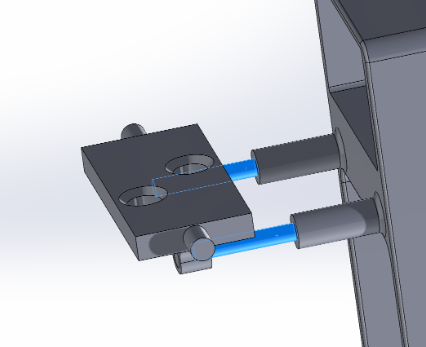
Telescoping rod and loading tray
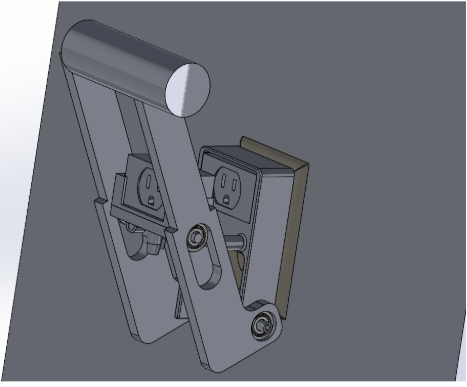
Full CAD Assembly
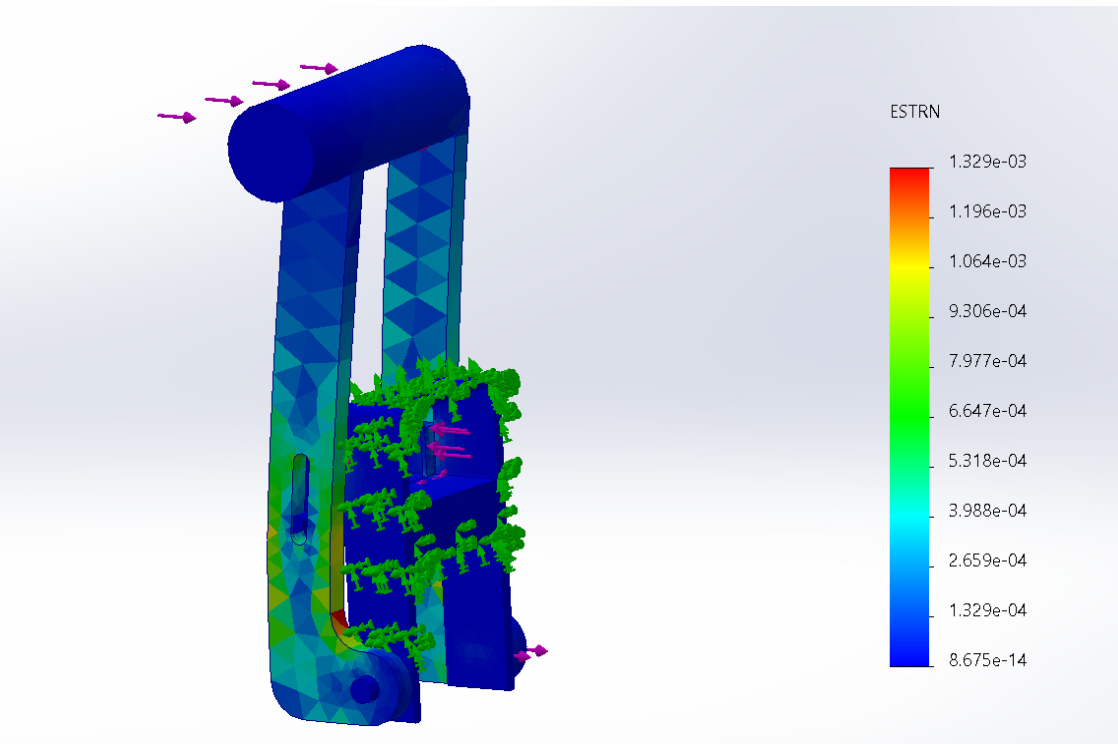
FEA Analysis showing negligible stress concentrations on lever
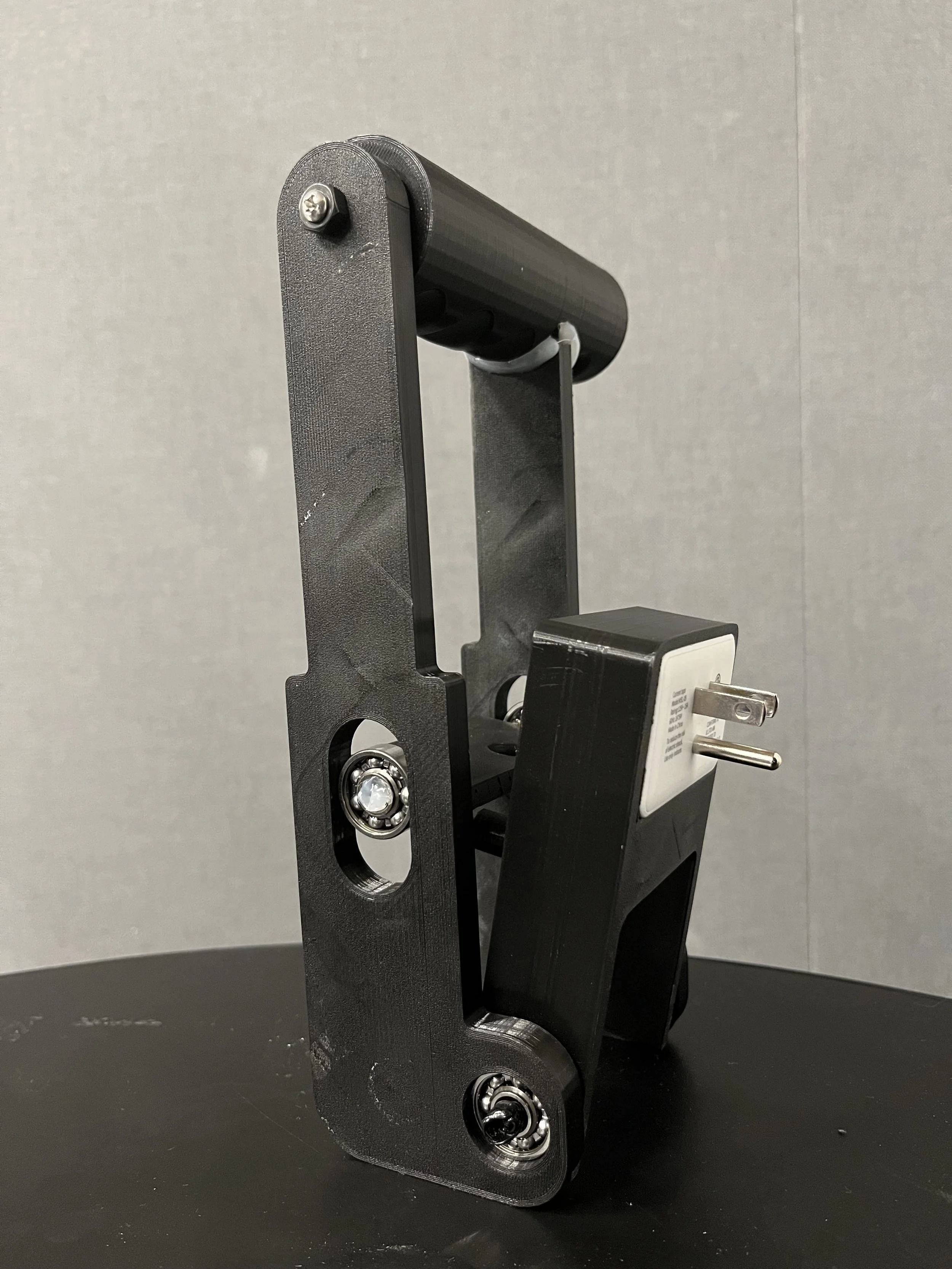
3D printed Prototype